Last Pirate: Survival Island
RetroStyle Games UAAdventure
4.42.94K Reviews
- Version
- 1.14.322
- Installs
- 10.00M
- Age Rating
- Teen
Screenshots
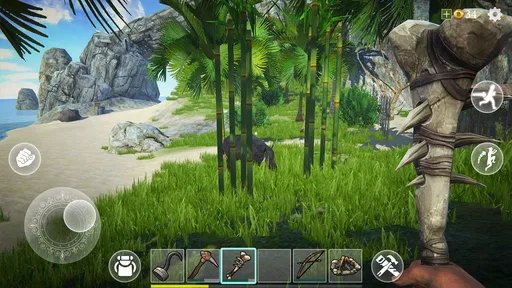
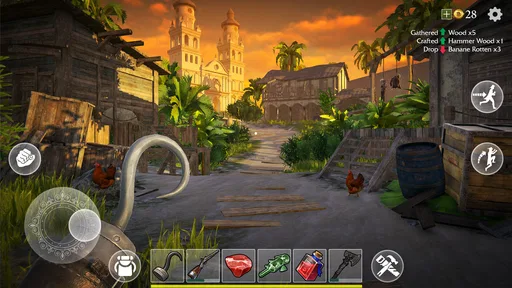
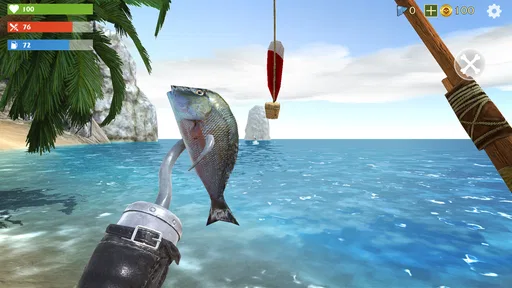
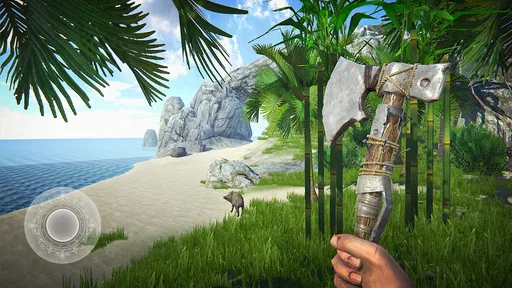
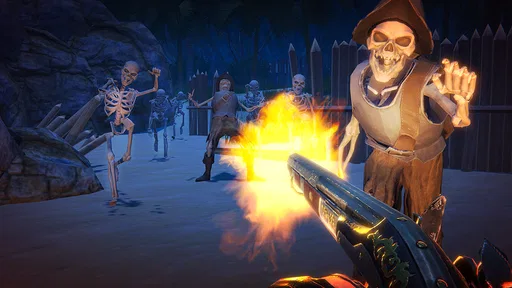
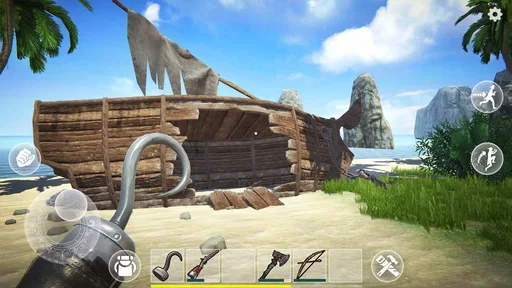
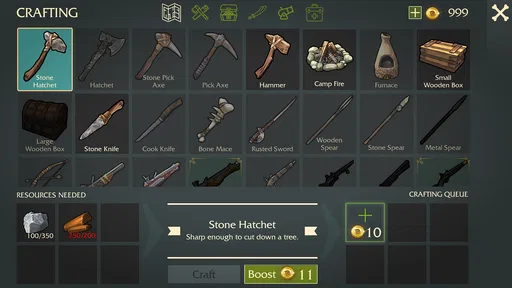
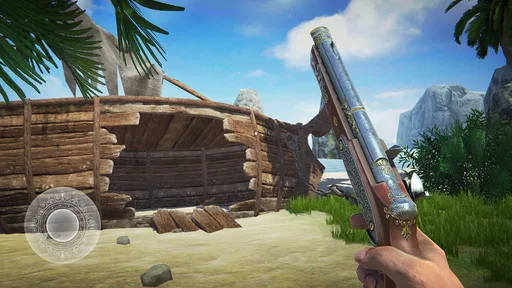
Our Review of Last Pirate: Survival Island
 Analysis by Appyee
I spent time with Last Pirate: Survival Island as an adventure game built around the uncomfortable question of how long I could stay alive with limited resources and an island full of problems. It puts survival, exploration, fishing, a threatening kraken, and the idea of building or protecting an ark at the center of the experience. That combination gives it a different mood from a straightforward action game: progress feels less like collecting trophies and more like turning a dangerous place into somewhere I can manage.
My first impression was that the game works best when I treat every trip away from safety as a small expedition. I am not simply moving from one objective marker to the next. I have to think about what I need, what I can carry, and whether the reward is worth the risk. That creates a steady tension even during ordinary gathering. The developer, RetroStyle Games UA, has clearly aimed for a survival adventure rather than a relaxed fishing game or a purely combat-focused island romp.
The game is free to start, carries a Teen content rating, and has reached over ten million installs. Its average rating sits at 4.3 from around 225 thousand ratings, which matches my overall impression: there is a solid, appealing core here, although the survival format will not suit everyone. The current version is 1.13.490, and it runs on devices using Android 7.1 or later. On iOS and Android, the important question is less whether the idea is attractive and more whether you enjoy repeating careful routines while gradually making the island less hostile.
How the island turns survival into a series of decisions
I find that the island’s strongest hook is how ordinary tasks become decisions about timing and risk. In this section, I look at how fishing, gathering, and the ark give each outing a purpose, and why a modest plan can be more rewarding than chasing every opportunity. That same need to plan also makes shared play worth thinking through before someone else picks up the device.
Early goals give each trip a purpose
The opening stretch is strongest when I focus on short-term goals instead of imagining the entire journey at once. Food, materials, shelter-related needs, exploration, and the larger ark objective all compete for attention. That competition is useful because it prevents the island from feeling like a simple resource field. I may leave with one plan and return with something else because a threat, a useful discovery, or a shortage changes my priorities.
Fishing is especially important to the rhythm. It gives the survival loop a quieter activity between more dangerous moments, but it does not make the game feel like a fishing simulator. I use it as part of a wider routine: gather what is immediately useful, look for opportunities to improve my position, then decide whether to push farther or return. That return decision is one of the most practical sources of tension in the game.
A useful habit is to prepare for the next outing before ending the current one. Instead of spending every available resource as soon as I obtain it, I try to keep enough flexibility for a sudden need. This makes the early game less wasteful and helps me understand which tasks are genuinely urgent. Players who rush toward every visible objective can make their own experience harder by ignoring the basic survival rhythm.
The ark gives the adventure a larger sense of direction. Without that wider purpose, island survival could become a collection of disconnected chores. Here, the ark acts as a reminder that gathering and exploration are supposed to lead somewhere. I like that structure because it gives meaning to otherwise repetitive work, although the pace can feel deliberately slow if I am looking for immediate unlocks or constant action.
Progress is easiest to notice through changing routines
One of the more interesting things about the game is that progress is not only about reaching a new location or checking off an objective. I notice it when a trip that once felt dangerous becomes manageable. I learn where I can fish, which areas deserve more preparation, and when the kraken-related danger should make me reconsider my route. The island starts to feel less like an unknown map and more like a place I understand.
That kind of progress is subtle, so players expecting a stream of dramatic rewards may find it less satisfying. The game asks me to recognize improvement in my own decisions. I waste fewer supplies, return at better moments, and choose tasks with a clearer reason. Those are meaningful gains, but they are not always presented with the same excitement as a new weapon or a flashy level-up in a conventional adventure game.
Unlocks matter most when they reduce friction rather than simply add decoration. A new possibility is valuable when it lets me prepare more intelligently, travel with greater confidence, or support the ark objective. I pay attention to whether an upgrade changes the way I approach the island. If it only gives me another reason to collect the same materials, the reward feels weaker. This is where the game’s pacing can divide players: patient survival fans may enjoy the gradual improvement, while players who want constant novelty may feel that progress takes too much effort.
My advice is to judge each reward by the workflow it creates. Before spending scarce materials, I ask whether the result will help with food, exploration, safety, or the ark. That simple filter prevents me from chasing every available improvement and keeps the larger journey visible. It also makes the game more approachable for someone playing in short sessions, because each visit can have one practical purpose rather than becoming an unfocused gathering run.
The challenge curve rewards preparation more than bravado
The difficulty comes from managing several pressures at once. A trip can be successful in one sense and still leave me in a worse position if I return without enough food, use too many resources, or expose myself to danger for a poor reward. The kraken adds a memorable threat because it changes the emotional tone of the island. Even when I am gathering or fishing, I do not feel completely detached from the wider danger.
I found the challenge most enjoyable when I accepted that retreat is part of the strategy. Survival games often punish the belief that every expedition must end with maximum profit. In this one, returning early can preserve the supplies needed for a better attempt later. That is not glamorous, but it is one of the clearest ways to make progress consistently. I would rather complete several controlled trips than lose the result of a long outing because I stayed too long.
The difficulty may feel uneven for players who approach it like an ordinary action adventure. The game does not always reward rushing, and the safest choice is not necessarily the most exciting one. Exploration becomes more comfortable as I learn the boundaries of my preparation, but the early uncertainty can be frustrating. Someone who dislikes resource management, repeated gathering, or cautious backtracking should probably choose a faster adventure game instead.
There is also a difference between challenge and inconvenience. When I fail because I made a poor decision, the setback feels fair and instructive. When progress slows because I must repeat a familiar collection routine, the experience becomes less engaging. That distinction is important here. The game has a strong survival identity, but its appeal depends on whether I see repetition as part of the fantasy or as an obstacle between me and the next interesting event.
Everyday play works best in short, deliberate sessions
A realistic way to play is during a commute, a break, or a quiet evening when I have enough time for one focused expedition. I might begin by checking what the ark or survival routine needs, spend the session fishing and collecting nearby materials, then return before the trip becomes unnecessarily risky. That approach gives the game a satisfying beginning and end. I am not required to turn every session into a major expedition to feel that I accomplished something.
Short sessions also help with the game’s slower pacing. If I play for too long while repeating the same task, the survival loop can start to feel mechanical. By giving each session a clear goal, I preserve the sense of purpose. One session can focus on food, another on exploration, and another on materials connected to the ark. This is more effective than opening the game without a plan and hoping the next reward will create motivation.
The game is less suitable for a player who wants a fully relaxing island escape. Fishing may provide a calmer moment, but the overall experience is shaped by survival pressure and the possibility of danger. It is also not the best choice for someone who wants a purely linear story with no need to manage priorities. I would recommend it to players who enjoy making small plans, learning from failed trips, and watching a hostile environment become more familiar over time.
Retention comes from pressure, but purchases can affect the mood
Like many free games, this one can be played without an upfront payment, while optional in-app purchases range from $0.99 to $79.99 per item. I would approach those purchases carefully. The strongest reason to continue playing should be the satisfaction of improving my survival routine, not the feeling that I must pay to remove every delay or difficulty. Players who prefer a completely predictable progression model may feel more comfortable with a paid adventure that presents its content without optional spending.
The retention design is most convincing when the island itself keeps raising practical questions. Can I prepare better for the next trip? Can I secure what the ark needs? Can I explore farther without turning one mistake into a complete setback? Those questions encourage another session naturally. The pressure is less about a single dramatic finish and more about maintaining a stable position while gradually reaching a larger goal.
That pressure can also become tiring. If I am returning mainly to repeat the same resource routine, the game loses some of its adventure character. I think the best way to avoid that is to alternate safe preparation with purposeful risk. Spending every session in the safest area makes progress feel slow, while taking risks without preparation creates unnecessary setbacks. The game rewards a middle path: prepare enough to make exploration possible, but keep enough caution to recognize when the island is asking me to turn back.
Another practical consideration is the Teen rating. The presence of survival danger and the kraken gives the game a darker edge than a child-focused island title. I would not choose it for a young child simply because the setting looks colorful or exploratory. For older players, the rating fits the atmosphere: this is an adventure about danger, scarcity, and staying alive rather than a harmless vacation on a beach.
How it compares with other survival adventures
Compared with a conventional action adventure, this game gives more weight to preparation and resource decisions. In a typical action title, I may move forward because the next objective is clearly marked and combat is the main test. Here, moving forward is often a judgment call. The question is not only whether I can reach a place, but whether I can afford the trip and return in good condition.
Compared with a dedicated fishing game, fishing here has a practical role. It supports survival and contributes to the wider island routine instead of being the entire attraction. Players looking for detailed fishing mechanics should not treat this as a specialist simulation. Its appeal comes from the contrast between a calm catch and the larger threat surrounding it.
Compared with more expansive survival games, the experience feels easier to approach because its identity is concentrated around the island, the ark, fishing, and the kraken. That focus is a strength when I want a mobile adventure with a clear theme. The trade-off is that players seeking a huge sandbox with endless construction possibilities may find the scope more limited. I prefer this focused structure when I want a game I can understand quickly, but I would choose a broader survival title for long-form building and experimentation.
Who should play and who should skip it
I would recommend this game to someone who enjoys survival adventures but wants the format to remain manageable on a phone. It is a good fit for players who like gathering with a reason, cautious exploration, fishing as part of a larger routine, and a visible long-term objective in the ark. It also suits people who enjoy learning a dangerous environment rather than overpowering it immediately.
I would be more hesitant to recommend it to someone who needs rapid action, constant story scenes, or generous rewards every few minutes. The game can ask for patience, especially when the next meaningful improvement depends on another careful resource run. Players who dislike optional purchases in free games may also prefer a premium alternative, even though the game itself is free to start.
For a new player, I suggest keeping the first goals modest, treating every return trip as a success when it preserves supplies, and avoiding the temptation to explore farther simply because a route is available. Fishing can be a useful reset between riskier tasks, while the ark should remain the long-term reference point for deciding what to collect. Most importantly, I would not measure progress only by dramatic unlocks. In this game, knowing when to leave the island’s dangerous areas is a genuine skill.
My verdict on the progression and pacing
Last Pirate: Survival Island succeeds when its goals, unlocks, and dangers work together to make each expedition feel like a choice. The ark supplies direction, fishing softens the rhythm, and the kraken prevents the island from becoming a harmless resource garden. Progress is most satisfying when I can feel my decisions improving: I prepare better, waste less, and take risks for reasons I understand.
Its weaker side is the same feature that defines it. Repetition, cautious returns, and gradual improvement can feel slow if I want a more immediate adventure. The free-to-play structure and optional purchases also mean I would keep an eye on how much patience I am willing to spend before paying for convenience. For me, the game is worth trying because the survival loop has a clear personality and works well in focused sessions.
My final recommendation is simple: play it if the idea of surviving through planning sounds more appealing than racing from one spectacle to another. Skip it if you want a linear story, nonstop combat, or a completely frictionless progression path. For the right player, the best reward is not merely reaching the next objective. It is the moment when an island that once dictated every move finally starts to feel like a place I can survive on my own terms.
Privacy and Permissions
See what permissions an app requests and how it handles your data.
- Wi-Fi connection information
- view Wi-Fi connections
- Other
- view network connections, full network access, control vibration, prevent device from sleeping, Google Play license check
Verdict
Strengths of Last Pirate: Survival Island
- Open-world island exploration encourages discovery and experimentation.
- Crafting system offers many tools, weapons, and survival items to create.
- Offline play makes it convenient when you have no internet connection.
- Base building lets you customize shelters and improve your island setup.
- Fishing and hunting add variety beyond gathering and combat.
Limitations of Last Pirate: Survival Island
- Resource gathering can become repetitive during longer play sessions.
- Some crafting recipes require considerable time and material investment.
- Combat controls may feel imprecise when facing several enemies.
- The interface can feel crowded on smaller smartphone screens.
- Progress may be slowed by limited inventory space and storage management.
Similar Picks in This Category
View All
Roblox
Roblox Corporation4.2

Pokémon GO
Niantic, Inc.3.5

Ninja warrior: legend of adven
TOH Games4.6

Ninja Arashi
Black Panther4.6

Eyes - The Horror Game
Fearless Games sp. j.4.5

Critical Action:Gun Strike Ops
FPS Shooter & Action Game4.3
Frequently Asked Questions
What is Last Pirate: Survival Island about?
Last Pirate: Survival Island is a survival adventure game in which you play as a stranded pirate trying to stay alive on a dangerous island. You must explore beaches, forests, caves, and abandoned locations while collecting resources, crafting tools, building shelter, finding food, and defending yourself from hostile creatures. The game combines exploration, crafting, combat, and survival challenges in a pirate-themed setting.
Can I play Last Pirate: Survival Island offline?
The game is generally designed as a single-player survival experience and many of its core activities can be enjoyed without an active internet connection. However, connection requirements may vary depending on the version, device, advertisements, updates, or optional features. It is recommended to launch the game once while connected, download any necessary files, and check the store description before relying on it for completely offline play.
Is Last Pirate: Survival Island free to download and play?
Last Pirate: Survival Island can typically be downloaded for free, but free access may include advertising, optional purchases, or other monetization elements depending on the platform and current release. You can usually progress through exploration, crafting, and survival without paying, although optional purchases may offer convenience or remove certain limitations. Review the in-app purchase information before downloading, especially on a shared device.
What do I need to do first after starting the game?
Your first priority should be securing basic survival supplies rather than traveling too far from the starting area. Collect wood, stones, food, and other nearby materials, then craft essential tools and create a safe shelter or base. Pay attention to health, hunger, thirst, and environmental dangers. Exploring too aggressively at the beginning can leave you without equipment or resources when enemies appear.
Does Last Pirate: Survival Island require a powerful phone or tablet?
The game includes a 3D world, animated creatures, environmental effects, crafting systems, and combat, so performance can vary considerably between devices. Newer phones and tablets should provide a smoother experience, while older or lower-end hardware may encounter longer loading times, reduced frame rates, or occasional crashes. Before installing, make sure your device has enough free storage and update its operating system if possible.
Play our best games!


